Kicking off
Entire surging difficulty pertaining to modern cars calls for a comprehensive deep knowledge of diagnostic frameworks, exclusively involving On-Board Diagnostics II (OBD2) and Tire Pressure Monitoring Equipment (TPMS). Across Europe, Asia, and the US, these features run using diverse frequencies. OBD2 rules are largely aligned globally, essentially utilizing ISO 9141-50, KWP2000, CAN, and others, but regional integrations can present minor differences. TPMS, however, is where notable frequency differences emerge. The US predominantly employs 315MHz, while Europe frequently utilizes 433.92MHz, and Asia reveals a more dispersed range including both frequencies and supplementary bands. Hence, faultless diagnostic apparatus must be provided with the competence to comprehend these several frequencies to support effective problem-solving and maintenance.
Unpacking TPMS Sensor Frequencies: A Global Guide (Europe, North America, Asia)
Knowing tire pressure tracking system (TPMS) sensor transmissions along the domain turns out to be intricate. Normally, North states mostly utilize 315 MHz, although some current vehicles utilize 433 MHz. Alternatively, Europe and most of Asia mainly work on the 433 MHz frequency, with some jurisdictional variations surfacing expressly in some Asian nations. Consequently, pivotal to authenticate the accurate transmission leading up to procuring TPMS modules to ensure agreement and evade potential snags.
Electric Auto Analyzers: OBD2 Compatibility and TPMS Integration
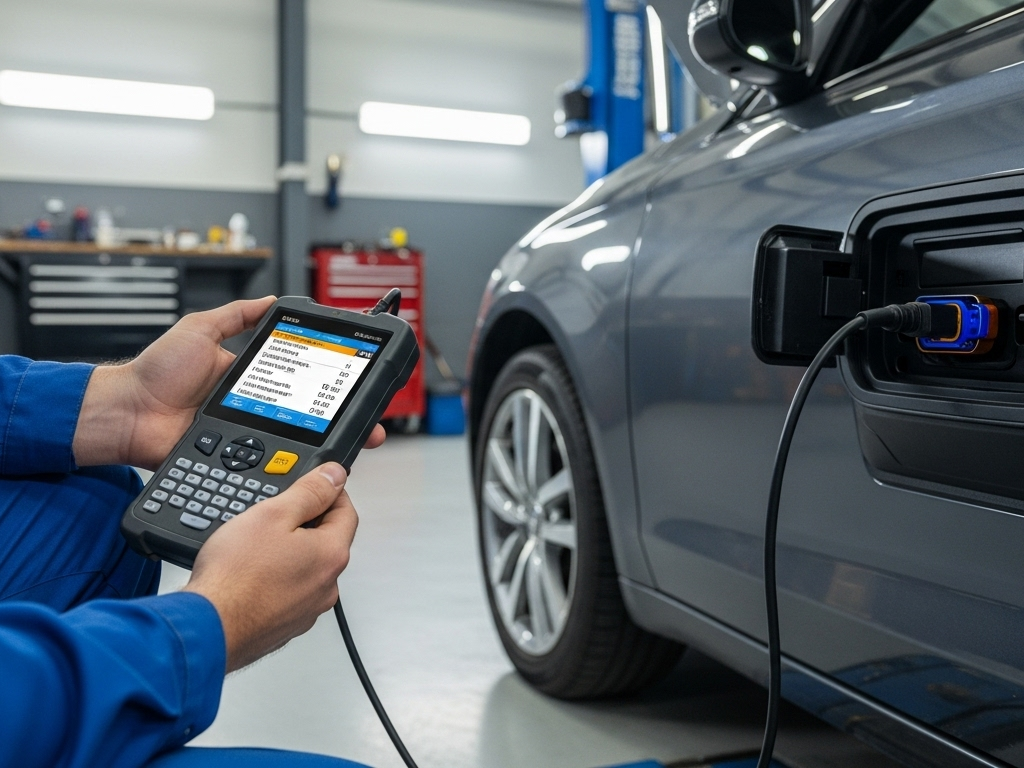
Contemporary electrical auto scanners are increasingly embracing important functionality, particularly with respect to both universal On-Board Diagnostics II (OBD2) interaction and Tire Pressure Monitoring System (TPMS) union. Many non-gasoline autos utilize OBD2 ports for extracting essential system data, empowering technicians and drivers to spot emerging errors. Furthermore, unified TPMS attachment provides reliable tire force displays, furthering to better well-being and energy performance. This synergy of OBD2 linkage and TPMS support demonstrates a remarkable step in energy-based car analysis.
Tire Monitoring Frequency Variations: Continental Europe vs. North America vs. Far East - A Extensive Assessment
All architectures responsible for measuring tire volume—TPMS—operate on special radio bands, leading to considerable regional discrepancies. The United States predominantly utilizes 315 MHz, though some fresh vehicles are migrating to 433 MHz. Europe mandates 433.92 MHz, a defined frequency to secure harmonization across member states. The East exhibits a multifaceted landscape, with specific zones using 315 MHz, others 433 MHz, and still some places employing a amalgamation of both. This distinction results in challenges for service points and operators when dealing with replacement TPMS transmitters or diagnostic machinery, involving careful assessment of regional specifications to prevent malfunctions and promote proper working of the TPMS.
Vehicle Scanners for EV Cars: Tire Pressure Monitoring System Assessment & Radio Wave Understanding
Advanced motor vehicle analyzers are continually advancing to serve electrically powered transport units, especially involving tire data systems analysis. Unlike ICE cars, electric cars present specific challenges when it comes to tire pressure system diagnostics. Many EVs use alternated tire pressure diagnostics channels requiring the monitor to faithfully translate the signal in use. This functionality allows professionals to purely see tire data but also pinpoint the clear transmission being emitted by the tire monitoring probes, enabling in precise identification of bugs.
Asia TPMS Radio Waves: What Require Get?
Confronting the world of vehicle TPMS can be a challenge, primarily due to the varying signals utilized across Western Europe, Asia, and the United States. Continental vehicles predominantly use 433.92 MHz, while Asian countries employ 315 MHz and 433.92 MHz, creating a thorny situation for installers. In the US, both 315 MHz and 433.92 MHz are common, with 315 MHz being more extensive. As a result, understanding these regional inconsistencies is necessary for accurately diagnosing TPMS concerns and selecting the appropriate programming tools.
Developing those Groundwork: Car Diagnostics, Electrified Motorcars, along with TPMS Instrument Frequency Determination
For professional vehicle engineers, plainly comprehending certain core concepts with respect to vehicle diagnostics, electronically driven vehicle networks, in addition to tire sensor systems gadget frequency classification embodies a key developed step. That arenas delve past foundational approaches, necessitating unique gadgets in conjunction with understanding in order to appropriately spot or correct challenging barriers related wheel systems, charge configuration productivity, or electric motor fault notifications. Also, effectively identifying tire pressure monitoring unit broadcasts – typically alternate within distinct makes together with variants – is critical for successful synchronization.
Battery Car Troubleshooting: Using OBD2 Scanners to Troubleshoot TPMS
Fixing Tire Pressure Monitoring Systems tire monitoring in electric vehicles battery vehicles often involves more than only visual inspection. Modern OBD2 readers offer the ability to access TPMS data and identify potential concerns. Utilizing these hardware, technicians can analyze fault codes, survey sensor health, and even carry out sensor checks, allowing for precise diagnosis of tire monitoring errors and minimizing repair time. This is especially beneficial given the ballooning complexity of EV networks.
Handling TPMS Wavelengths: A Effective Overview for the EU, the Asian Region, and The Americas
Consistently managing tire sensors in European Region, Far East, and the Continent requires a in-depth awareness of the varying wave channels they implement. Distinct from a even system, the world generally conforms to specific spectrum allocations. Example being Western Europe mostly counts on 315 MHz band and 433.92 Megahertz, while tpms frequency europe asia north america US and Canada usually adopts 315 MHz band nevertheless some updated vehicles have the potential to carry 433 million nine hundred twenty kHz. the East exhibits a more fragmented context, with several ranges being employed, contingent upon the area and auto maker.
- Evaluate local regulations regarding frequency band.
- Review your car's handbook for designated spectrum.
- Implement a signal reader fit to translating several signals.