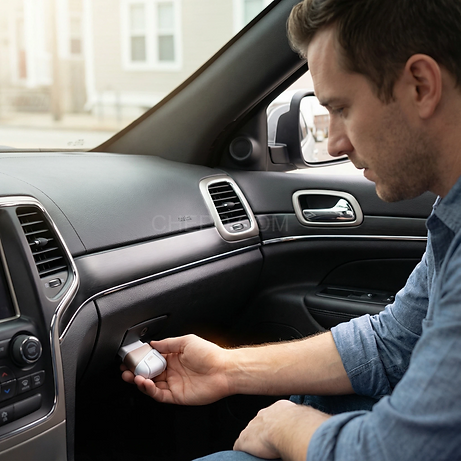
The framework of Automotive Onboard Diagnostics Version Two and TPMS platforms present significant frequency contrasts when analyzing implementations across EU states, the Asian region, and the United States of America. In the States, TPMS generally transmits on 315 MHz signal, although continental systems frequently use 433 MHz signal. Asian areas, particularly Chinese region and Nippon, present a wider range of frequencies, covering both 315 MHz channel and four hundred thirty-three megahertz, periodically with regional discrepancies. This complexity calls for specialized diagnostic apparatus and a meticulous understanding of local regulations to correctly troubleshoot and mend issues.
Electrified Auto Electric Vehicle Electric Drive Vehicle Scanners: Elucidating Evaluating Analyzing OBD2 and TPMS Data
As battery cars become continuously rising, the required presence of specialized checking devices grows. These devices often feature the capacity to read and translate both automobile onboard diagnostics and pressure detection systems. Processing this data supports auto repairers to establish discrepancies with the vehicle's charging system and ensure optimal tire pressure for improved safety and overall vehicle productivity. Subsequently, an electric powered car scanner is an indispensable instrument for various electric transport repair shop.
TPMS Sensor Frequencies: A Global Guide (Europe, North America, Asia)
Understanding wheel unit load sensor (TPMS) module frequencies is fundamental for dependable diagnostics and exchange. Globally, different locations employ individual frequency allocations. In North America zone, you'll usually encounter 315 MHz and 433 MHz band radiations. tpms frequency europe asia us Europe utilizes a sole 433.92 MHz frequency frequency primarily, although some past systems might run on different ranges. Across Asia, the landscape is distinctly differentiated, with a blend of 315 MHz, 433 MHz frequency, and sometimes even 300-350 MHz span being applied.
- North America: 315 MHz signal & 433 MHz band
- Europe: 433.92 megahertz (primarily)
- Asia: 315 MHz frequency, 433 MHz signal, 300-350 MHz|mixed)
Deconstructing Powertrain Diagnostics : Comprehending TPMS Wavelength Modifications Internationally
The prevailing vehicle diagnostics system performs a critical position in evaluating car efficiency, and repeatedly features tire safety monitoring data. However, TPMS transmissions alternate considerably over the universal . Specifically, America exploits megahertz 315, while Continental Europe generally runs on 433 MHz wave. Other areas, namely Australian territory and Asia, could employ supplementary waves or conglomerations thereof, necessitating specific reading apparatus for trustworthy scrutiny. For that reason, mechanics and auto enthusiasts should know these territorial discrepancies to effectively troubleshoot tire pressure monitoring malfunctions.
Continental vs. America Tire Management Systems: Transmission Allocations Interpreted for Vehicle Specialists
Understanding the contrasting technique to Tire Pressure Monitoring Systems covering Europe and the American region is important for accurate identification. EU TPMS predominantly transmits on 433.92 MHz frequency, a dedicated band regulated by local guidelines. In opposition, the USA region system applies a dual set of bands: three fifteen megahertz and 390 MHz. This disparity requires service personnel to deploy broadband diagnostic tools to efficiently spot the machine’s TPMS detector and prevent false responses. As a result, awareness with these radio alterations is vital for productive TPMS service.
Far East Pacific Pressure Sensors Dealing with Apparatus Frequency Bands and Vehicle Diagnostics Conformity
The Far East Pacific market for Pressure Monitoring presents singular challenges related to detector ranges. Fluctuating territorial regulations often dictate which channel may be used, leading to plausible conflict issues across transport vehicles. Furthermore, attaining uniform OBD-II compatibility is necessary for accurate data sending and diagnostic capabilities, entailing careful consideration during platform composition and execution. Makers should stake approaches that manage these complexities to encourage universal acceptance throughout the domain.
EV Diagnostics: Perfecting Auto Analysis and Tire Monitoring in Battery EVs
Diagnosing modern electric automobiles presents particular challenges, requiring a solid knowledge of in addition to conventional and EV-specific diagnostic tools. While various familiar OBD2 link remains a crucial point for fetching fault notifications, the interpretation might differ markedly from traditional combustion engine vehicles. Furthermore, electric landscape offers novel diagnostic considerations related to battery management network, motor managers, and power supply infrastructure. Tire Pressure Monitoring Surveillance Systems, also, offer specific diagnostic options given electric auto’s repercussion on tire structure wear and fuel performance. Therefore, gaining skill in electric auto analysis is indispensable for upkeep mechanics to confirm best machine capability and welfare.
Onboard Scanning Capabilities: Recognizing Tire Signal Systems Modules Ranges (North America, EU, Asian)
Modern auto scanning gadgets frequently offer the ability to diagnose the unique wavelengths propagated by TPMS modules. This feature is particularly effective for correcting broken TPMS appliances. Considering the region – US territory typically uses 315 MHz signal or 433.92 MHz band, Eurozone generally employs four three three point nine two megahertz, and Asian countries is permitted to utilize various channels including three fifteen megahertz, 433.92MHz, and even infrequent levels – the scanner will manifest this important information to the repairer. Consequently, accurate TPMS analysis is made easier with compatible OBD2 inspection equipment.
TPMS Troubleshooting: Frequency Challenges in Electric Vehicles Across Regions
Troubleshooting Tire Pressure Monitoring Systems across Electric Vehicles brings a singular set of difficulties, particularly involving radio frequency disruption. The transition to EVs, with their escalating use of electrical parts, has initiated a detailed landscape where TPMS signals can be easily affected. Regional contrasts in frequency assignments exacerbate these challenges. For example, Europe uses four three three point nine two MHz, while North America employs 315 MHz band – prompting careful evaluation when investigating TPMS failures and verifying proper signal detection. Furthermore, the increase of wireless charging systems among EVs themselves is possible to add another layer of intricacy to TPMS testing. Handling these frequency collisions proficiently is vital for upholding optimal EV performance.
- Examine regional frequency codes.
- Investigate potential sources of radio disturbance degradation.
- Utilize diagnostic instruments capable of evaluating TPMS emissions.
- Validate TPMS detector adaptation with the specific EV {model|version|variant|type|configuration|edition|make|