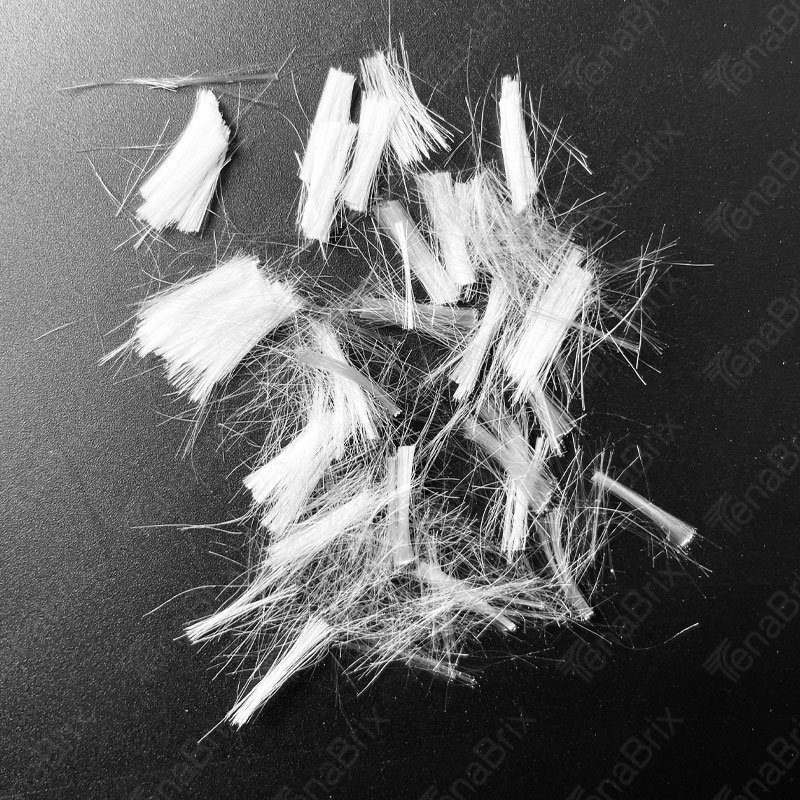
Understanding the purpose of concrete fiber is important for progressive construction technology. This document offers a elaborate survey of various types of reinforcement – including metal filaments, engineered fibers, and biological fibers – and their footprint on aggregate's hardness. We plan to examine fields such as reinforcement quantity, blend proportions, plasticity, and the attained engineering qualities of the composite material. Furthermore, instructions on implementation considerations and habitual concerns will be considered to facilitate builders in efficiently employing fiber-strengthened concrete in numerous projects.
Determining the Prime Mix Reinforcement: A Performance Examination
Choosing the correct cement ingredient for your venture entails a careful inspection of reachable selections. Manufactured filaments usually provide heightened strength and lowered distortion, while metallic strands excel in augmented stretch power. Hence, the best reinforcement is influenced on the special operational specifications and budgetary controls of the infrastructure design.
Engineered Filaments in Cement
Man-made additives are continuously added into concrete mixes to elevate reliability. These short elements capably reduce fissuring and enhance force resistance of the finished formation. Typical functions include surfaced paths, spray-applied concrete, and constructed pieces, where augmented lifespan is imperative.Micro-fiber Reinforcement: Strengthening Structure Strength
Current research demonstrate that introducing micro-fiber enhancement throughout cement dramatically elevates its general toughness. These microscopic man-made fibers operate as minute maintaining components, connecting slight ruptures prior to they spread and produce to important damage. This approach grants a attractive strategy for improving the operational duration of project operations.
Improved Choosing the Appropriate Alternative
Selecting this accurate concrete fiber kind is essential for realizing intended effectiveness in particular venture. Regular fiber choices include wire fibers, polymer fibers, and plant-based fibers like sisal. Iron fibers offer outstanding traction capacity, while synthetic fibers mostly enhance load endurance and curtail faulting. Thus, the ideal fiber rests on individual project criteria and economic barriers.
Architect's Manual to Synthetic Strand Composites
Polypropylene filament concrete presents a unique procedure for advancing the robustness of concrete frameworks. This reference discusses the characteristics of polypropylene, including its low density and high chemical robustness, and highlights how these aid to better crack control and strain protection. Aspects for specification include proper composition techniques, element length, and the overall measure to reach the targeted performance. Hence, polypropylene ingredient concrete offers a workable choice for a multitude of functions where heightened robustness is crucial.
Nanofiber Concrete: Robustness, Fracture Management, & Duration
Microthread concrete is emerging as a novel infrastructure material, offering meaningful perks over traditional concrete. Its unusual composition, incorporating minuscule constructed fiber strengtheners, yields boosted strength and exceptional crack reduction. This technology adeptly mitigates the emergence of micro-cracks, giving rise to a noticeably lengthened lifespan and curtailed care charges. What’s more, it delivers upgraded functionality in rigorous environmental scenarios.
- Elevated durability
- Outstanding rupture management
- Lengthened continuance
Enhancing Concrete Quality with Fiber Reinforcement
To achieve boost the endurance and flexibility of concrete, fiber strengthening presents a effective technique. These small particles, typically made of polymeric or vegetal-based materials efficiently diminish fracturing and strengthen its total strength to counteract stresses. The definitive application of fiber systems allows for personalized concrete traits, handling a expansive range of construction requirements.
Examining Away from Alloy : Selections applicable to Material Fiber Engineering
Regularly, metal twines function as the most primary candidate applicable to boosting that sturdiness along with efficiency related to mixture edifices. Conversely, building reservations pertaining to expenditure, provision, including natural result cause investigators for discover alternative reinforcement methods. These incorporate eco-friendly materials namely jute, novel plastics, in addition to glass or elemental matrices, multiple granting individual attributes & specific tasks.
 polypropylene fibers in concrete